Bitcoin suffered a roughly 30% drop before recovering somewhat yesterday after word hit the market indicating Chinese regulators would no longer allow payment processors to serve bitcoin exchanges. Doubts about the validity of such statements have increased since their announcement, with little official word seen yet from regulators or payment companies. Incidentally, at least two of the largest CNY exchanges happened to drop their zero-fee trading on the same day, offering initial insight into how much free trading was bolstering the recent Chinese market presence. Yesterday morning, reports began surfacing on Chinese microblogging sites indicating the country’s top payment processing companies …
Read More →
As initially discussed in Part 1 of this series, bitcoin’s exchange rate has garnered significant attention for its recent climb, but far less visible is the dramatic growth in the infrastructure underlying bitcoin economy itself. In continuing with the theme of Part 1, this report will look at the economic evolution behind bitcoin’s growth since the last time exchange rates climbed this dramatically. Adoption In the beginning of this year, the notion of a business accepting payments in bitcoin – particularly at a physical store – was relatively unheard of. When bar/nightclub EVR (co-owned by Charlie Shrem of BitInstant) in …
Read More →
Nov 16, 2013
Posted
Businesses, Economics, Featured, Mining, Security
Tagged Network Strength, payment, Transaction Growth, wallet

Publishing has evolved drastically over the past two decades, proving to be one of the industries most disrupted by the advent and proliferation of the internet. Ever-lower barriers to entry for new participants have led to more competition for publishers, as well as more noise for consumers. The result has been a broad decline in publishing revenue and a user experience dominated by increasingly invasive advertising. Bitcoin, with it’s unique applicability for micropayments, may eventually be able to conquer this problem. An Old Model Disintegrates Historically, revenue generation for publications was straightforward. Publishers would sell individual copies or subscriptions to …
Read More →
Last week, both the California State Senate and Assembly voted unanimously to pass a bill to amend the California Money Transmission Act (MTA). According to Roger Dickinson, Chair of the Assembly’s Committee on Banking and Finance who introduced the bill in February, one of the primary goals of the amendment is to “remove barriers to market entry to start-up payment technology companies.” In addition to federal regulations like those from FinCEN, money transmitters in the US are subject to state regulations as well. California’s Department of Financial Institutions (now the Department of Business Oversight, which oversees execution of the MTA) …
Read More →
Sep 9, 2013
Posted
Bitcoin 201, Economics, Featured, News, Regulatory
Tagged MTA, NPRC, payment, startup
Today the Bitcoin Foundation filed comments with FinCEN regarding the regulator’s Notice of Finding in the Liberty Reserve case. Though Liberty Reserve was not a bitcoin company, FinCEN’s reasoning in the filing makes implications that could be applied to digital currencies in general. Accordingly, the Bitcoin Foundation seized the opportunity to remind FinCEN of a number of important points. In May, the operators of Liberty Reserve were arrested on money laundering charges. The company, operating out of Costa Rica, used a centrally-issued digital currency mechanism to facilitate monetary transfers globally – often with little or no background checks into the identity …
Read More →
Jul 19, 2013
Posted
News, Regulatory
Tagged Anonymous Payments, Bitcoin Foundation, Liberty Reserve, payment, Though Liberty Reserve, US

It is no secret that bitcoin usability has room for improvement. Fortunately, a new feature planned for the bitcoin v0.9 release will significantly increase merchant and customer usability in four key areas: ease of payment, recurring payments, dispute resolution, and immediate-feedback transactions. The key improvement is a new type of payment messages where a merchant can send a signed request (PaymentRequest) specifying the amount to be paid and a description of the transaction. The customer can then send payment to the merchant and receive an acknowledgement (PaymentACK) of the transaction with a message from the merchant. Before discussing the advantages …
Read More →
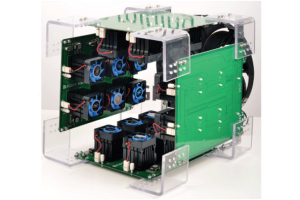
Considering a bitcoin mining hardware purchase? Make a more informed decision with our Bitcoin Mining Dashboard. Last week, TerraHash began accepting pre-orders for ASIC mining gear using Avalon ASIC chips, including complete kits with hashing speeds as high as 180 GH/s. TerraHash provides boards and assembly for Avalon ASIC chips running at 282 MH/s each. Additionally, TerraHash pre-ordered 20,000 chips – over 5.6 TH/s – for resale in their boards. Just one day after opening for orders, PayPal froze their account, presumably due to anti-fraud systems triggered by the influx of funds. As a result, only bitcoin, wire transfers and eventually …
Read More →
Jun 26, 2013
Posted
Businesses, Mining, News
Tagged ASIC, Bitcoin Mining Dashboard, MH, payment, transaction
Considering a bitcoin mining hardware purchase? Make a more informed decision with our Bitcoin Mining Dashboard. KnCMiner broke into bitcoin mining by selling FPGA equipment last year. On May 11th they announced two ASIC bitcoin miners: the Jupiter and Saturn miners. KnCMiner announced today that they pre-sold 890 orders of these devices. Both are reported to be built on 28nm processes, several generations ahead of both Avalon and ASICMiner. The smaller process allows for significantly more efficient power efficiency, as well as mining density – allowing users more hashing power in a smaller chip. The specs of their two miners: Jupiter: 350 …
Read More →
Yesterday The Genesis Block was featured on Plan B, the popular bitcoin podcast. Greg, our Managing Editor, joined Plan B’s Chris and Drew in a discussion about recent regulatory headwinds, most notably those related to payment processors and Mt. Gox. Greg also explained in more detail how bitcoin blocks have printed well ahead of schedule for the past three years and provides an outlook on what to expect over the next 12 months, particularly around developments in consumer protection for bitcoin transactions. The full podcast is below and contains interesting discussion around a number of points, including Ripple and other new entrants …
Read More →
Retailers have been frustrated with credit card fees for years, and their opting out of a recent settlement underscores this frustration. From Reuters: A group of U.S. retailers, including Macy’s Inc. and Target Corp., sued Visa Inc. and MasterCard Inc. on Thursday, breaking off from a proposed $7.2 billion settlement reached last year over fees to process credit card transactions. The legal team representing millions of merchants came to a settlement with Visa and MasterCard over their inflation of “swipe fees” – a settlement worth over $7.2 billion. This settlement required signing an agreement protecting Visa and MasterCard from future litigation for …
Read More →