
The impact of Chinese enthusiasm for bitcoin in recent months has been felt by effectively all market participants. Since the beginning of October, bitcoin’s exchange rate has climbed roughly 950% vs most government fiat, largely driven by CNY markets. Equally as interesting are the aggregate habits of Chinese market participants visible via a number of non-traditional sources and the signals those metrics may send. Daily XBT/CNY trading volume in China has climbed from approximately 10K XBT per day in early October to more than 150K per day more recently. The drivers of that volume is likely a mix of general …
Read More →
Applications for the third round of quarterly grants from the Bitcoin Foundation are due this Friday, September 20. Given historical precedent, grants are likely to be given to projects that aid in the development, security and testing of vital bitcoin infrastructure, but are not likely to be commercially viable. Last quarter there was one recipient out of the twenty five project proposals submitted. The grant was given to Coinpunk, an open source software project that enables users to host wallets on servers they control, while also giving them access to their bitcoin via a web portal. This enables people to …
Read More →
This morning, Armory, an open source bitcoin wallet that claims industry-leading security, closed a $600K seed funding round – some of which was in bitcoin – from highly-credentialed legal, technical and financial investors. Armory was one of the first platforms to embrace ‘cold storage’ of bitcoin, a process in which private keys used to sign transactions are stored solely on a computer not connected to the internet. Bitcoin Foundation Chief Scientist Gavin Andresen stressed the importance of increased wallet security earlier this year, citing compromised computers as a primary source of vulnerability, despite the strength of the bitcoin protocol itself. …
Read More →
A critical bug fix was provided in an emergency release of Bitcoin 0.8.5 earlier this evening. On September 9, Bitcoin-Qt users with versions more recent than 0.8.0 were unable to start their software and received errors that their database was corrupt: coin database inconsistencies found Users were then prompted to reindex the block chain, a process that could take hours and was ineffective in resolving the inconsistencies. Bitcoin-Qt is the graphical version of the standard bitcoin client and the problem was later observed in Bitcoind, the command line version. Negative Transaction Version Numbers The problem was caused by an abnormal transaction …
Read More →
Trezor is the first mass-produced bitcoin hardware wallet and is on pace to reach customers’ hands next month. Hardware wallets, as opposed to the software wallets currently in use, allow users to store their bitcoins off of personal computers but maintain the ability to transfer bitcoins conveniently. The wallet is able to sign bitcoin transactions while connected to a computer via USB, without allowing the computer access to private information. Gavin Andresen, the lead developer of bitcoin-Qt, stated in June that wallet security is the largest concern in the coming year and that hardware wallets will be hugely beneficial. Bitcoin’s …
Read More →
In the world of bitcoin wallets, users have historically had to prioritize between ease of use, accessibility, and security. That decision may be easier now, thanks to the Bitcoin Foundation’s grant to Coinpunk, an open source, self-hosted wallet. Such a solution would allow users to access their bitcoin wallet via the web, without the counterparty risk of an external service to manage the process. The grant to Coinpunk marks the Bitcoin Foundation’s third allocation since announcing the program in December 2012. This grant falls in line with the goals expressed by Executive Chairman emeritus Peter Vessenes – to support projects that …
Read More →
At a town-hall style discussion in June, Bitcoin Foundation Chief Scientist Gavin Andresen cited wallet security as the most pressing issue in the bitcoin community. Though his solution at the time was hardware wallets, such as Trezor, he recently posted an alternative on GitHub: 2-factor authentication built into the client. The challenge facing users hosting wallets on their own computer is that their PC becomes a single point of failure. Once a security vulnerability occurs, a sophisticated attacker will have little trouble locating a wallet file, transferring it to their own computers and logging keystrokes to determine the password. Hardware …
Read More →
Jul 31, 2013
Posted
Bitcoin 201, News, Security, Uncategorized, Wallets
Tagged OTP, software, transaction, wallet

The United States is built on the foundation set by the Constitution and Bill of Rights – a combined fourteen pages of text if put into a modern word document. Now, 225 years later, the Code of Laws of the United States is more than 200,000 printed pages of additions by generations of lawmakers – and that only accounts for federal law, not state and local. Unfortunately, just like with software, if lines of code are added while the architectural organization degrades, an ever-increasing amount of time and resources will be required to make the system function. Good developers will …
Read More →
Butterfly Labs has donated 1,000 BTC – currently valued at more than $120,000 – to the newly established Bitcoin Development Fund. This is a meta-charity that supports a wide variety of bitcoin related charities and open-source projects: The Bitcoin development fund was created to support projects that benefit the greater bitcoin community. Special emphasis is placed on supporting open source code development as well as charitable organizations. This donation is from a wager in October, 2012 that they would meet their power target of 1 GH/s per 1.1 Watts of power in their ASIC bitcoin miners. Butterfly Labs completed shipping their …
Read More →
Jun 6, 2013
Posted
Businesses, News
Tagged ASIC, BDF, Bitcoin Development Fund, Butterfly Labs, GH, legal, software
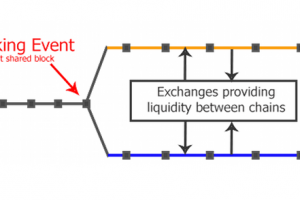
“I assign a 0% probability that we will continue with the present proof of work function. The present proof of work function is not going to survive the year. Period. If there’s one hard prediction I’m going to make it’s going to be that.” – Dan Kaminsky Dan Kaminsky’s statement at the bitcoin conference in San Jose proved extremely controversial. While many may find it unlikely that the mining algorithm changin is a certainty, it does raise the question of what would happen to bitcoin if there were a hard forking event in the future. On March 11th, 2013 there …
Read More →
Jun 6, 2013
Posted
Bitcoin 201, Featured, Security
Tagged block, BTC, chain, Dan Kaminsky, software, transaction